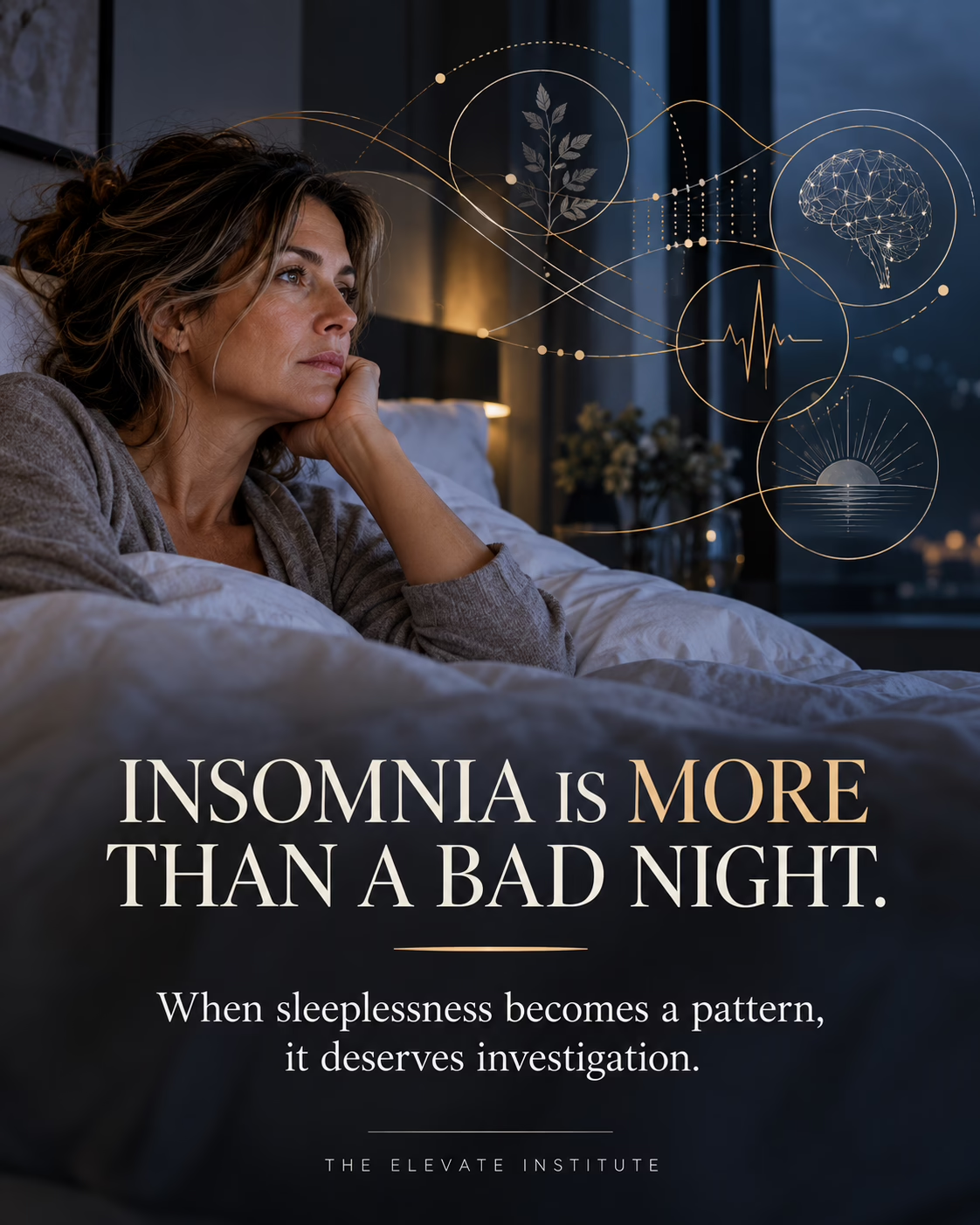



When You’re Tired but Can’t Sleep: Insomnia Is More Than a Bad Night
There is a particularly maddening form of exhaustion in which you spend the entire day fantasizing about sleep and then become mysteriously incapable of doing it the moment you are finally allowed. At three in the afternoon, you could sleep under your desk. At eleven at night, apparently you have been appointed night watchman. Your body is tired, your mind is tired, and you have done all the things. The room is dark, the phone is down, and the temperature is allegedly perfect according to whichever sleep expert currently owns the internet. Yet there you are, wide awake, wondering how something you have been doing successfully since birth suddenly requires so much effort.
For millions of people, this is not an occasional irritating night. Sleeplessness becomes a recurring experience that begins influencing how they approach bedtime, how they organize their days, and eventually how they think about their own health. That distinction matters because new research has brought insomnia back into the headlines, linking it with several significant health outcomes, including stroke, hospitalization, depression, suicidal behavior, and dementia.
The findings deserve attention without turning bedtime into another source of anxiety. The useful lesson is not that lying awake tonight places you on an inevitable path toward serious illness. It is that persistent insomnia deserves to be treated as meaningful health information rather than an inconvenient personality quirk.
A Bad Night Is Not Insomnia
We use the word insomnia casually. You slept badly after a stressful conversation. Your hotel pillow attempted to break your neck. Jet lag has you alphabetizing the spice cabinet at four in the morning. Suddenly, everyone has insomnia. Clinically, however, the definition is more specific.
According to the National Heart, Lung, and Blood Institute, insomnia involves difficulty falling asleep, staying asleep, or obtaining good-quality sleep despite having adequate time and circumstances for sleep. Chronic insomnia generally means those difficulties occur at least three nights a week for three months or longer. Daytime consequences matter too, including fatigue, impaired concentration, changes in mood, memory difficulties, and reduced ability to function normally.
An occasional rough night belongs to ordinary human life. A recurring inability to sleep that begins interfering with daily functioning belongs in a different conversation. The distinction matters because we cannot investigate a persistent pattern intelligently if we continue treating it as an isolated inconvenience.
What the New Research Actually Found
The study bringing insomnia into the current health conversation was published in Sleep Medicine Reviews. It was an umbrella systematic review, meaning the researchers gathered and evaluated previous systematic reviews examining insomnia in relation to major health outcomes. Where sufficient reviews were unavailable, they conducted additional systematic analyses.
The researchers examined relationships between insomnia and dementia, stroke, depression, suicidal behavior, mortality, occupational injury, and hospitalization. Their stroke analysis identified nine studies involving more than 1.3 million people, six of which could be combined statistically. Across those studies, insomnia was associated with a 26% higher risk of stroke. For hospitalization, five studies involving more than half a million people showed 28% higher odds of being admitted to hospital among people with insomnia.
Previous systematic reviews also found associations between insomnia and depression, suicidal behavior, and dementia, particularly Alzheimer’s disease. The findings were not consistent across every outcome, however, and mortality was not reliably associated with insomnia in the review.
That last distinction is worth preserving. Science becomes far less useful when we report only the findings that make the most dramatic headline. Understanding what researchers did not establish is just as important as understanding what they observed.
Association Is Not a Prophecy
If you have insomnia, these findings do not mean you are destined to develop cardiovascular disease or dementia. They certainly do not mean one difficult night has increased your personal risk of stroke by 26%. Population-level relative risk compares outcomes between groups; it does not predict what will happen to an individual.
More importantly, the review cannot establish that insomnia itself directly causes these conditions. The researchers explicitly acknowledge that limitation. Different studies defined insomnia differently, and relationships may be complicated by medications, existing illness, depression, pain, cardiovascular risk, menopause, other sleep disorders, and numerous additional influences.
There is also the question of direction. Poor health can disturb sleep, while disturbed sleep can affect health. Both can occur within the same ongoing physiological and behavioral pattern. That is considerably less convenient than a headline announcing that insomnia causes stroke, but it is also considerably more interesting.
The study offers a legitimate reason to take chronic insomnia seriously without providing a universal explanation for why it occurs or what it will mean for any particular person.
The First Cause May Not Be the Current Cause
This is where I think the insomnia conversation becomes especially useful.
Imagine someone begins sleeping poorly during an intensely stressful period. The original trigger may be obvious: a divorce, a frightening diagnosis, financial pressure, caring for an aging parent, menopause, a demanding work project, pain, grief, or construction outside the bedroom window at an hour that should constitute a misdemeanor.
For several nights, sleep becomes difficult. Eventually, the original circumstances improve, but sleep does not. Now bedtime itself has acquired a different meaning. The person begins anticipating another difficult night, wondering whether they will fall asleep, and calculating how many hours remain before the alarm goes off. What began as difficulty sleeping during an external disruption gradually becomes an experience surrounded by expectation, frustration, and vigilance.
The bed, which should be associated with sleep, can become the place where someone works exceptionally hard at performing an involuntary biological function. The harder they try to make themselves sleep, the more alert they may become to every minute they remain awake.
This is one reason cognitive behavioral therapy for insomnia, commonly called CBT-I, involves considerably more than a generic list of healthy bedtime habits. It addresses thoughts and behaviors that may perpetuate insomnia, including conditioned wakefulness, excessive time spent awake in bed, and anxiety surrounding sleep. Both the American College of Physicians and the American Academy of Sleep Medicine recommend CBT-I as a first-line treatment for chronic insomnia.
The broader distinction is one I wish we applied more often throughout chronic health: the cause of the first bad night may not be the same thing keeping someone awake six months later.
Understanding what initiated a problem is useful. Understanding what continues to participate in it may be equally important.
Insomnia Is Not Just a Nighttime Problem
People experience insomnia at night, but its relationships extend throughout the day. Someone who slept poorly may increase caffeine consumption to remain productive, nap later because they are exhausted, or reduce activity because everything feels disproportionately difficult. Those responses may be understandable and sometimes necessary, but depending on the individual and their circumstances, they may also influence the following night.
Pain introduces another relationship. Physical discomfort can interrupt sleep, while inadequate sleep may increase sensitivity to pain. Menopause can contribute to nighttime awakenings, but not every awakening during midlife is necessarily hormonal. Depression and anxiety may disturb sleep while also being affected by persistent sleep difficulties. Medications, alcohol, circadian timing, restless legs syndrome, and sleep apnea can all belong in the investigation.
None of this means every one of those factors causes insomnia. It means sleep is not occurring independently of the person’s health, behavior, physiology, and circumstances.
This is precisely where reducing the problem to a bedtime routine becomes inadequate. The conditions surrounding sleep begin long before someone turns out the light, and the consequences of disturbed sleep extend well beyond the moment they get out of bed.
Sleep Hygiene Has Become the “Eat Better and Exercise” of Insomnia Advice
Most people with chronic insomnia have already encountered the familiar recommendations. Keep the bedroom dark, avoid scrolling before bed, limit caffeine later in the day, maintain a consistent sleep schedule, exercise regularly, and establish a relaxing evening routine. These suggestions have merit. The National Heart, Lung, and Blood Institute includes consistent scheduling, physical activity, and attention to substances such as caffeine, nicotine, and alcohol among the foundations of healthy sleep.
But there is an important difference between supporting healthy sleep and treating established chronic insomnia.
Telling someone who has struggled with insomnia for six months to improve sleep hygiene can become the sleep equivalent of telling someone with a complicated chronic health concern to drink more water. The advice may be technically reasonable while remaining entirely insufficient for the problem in front of you.
CBT-I is a structured therapeutic approach that may include stimulus control, sleep restriction or compression, cognitive strategies, relaxation, and sleep education. The National Heart, Lung, and Blood Institute describes it as a treatment typically delivered over approximately six to eight weeks and identifies it as a usual first treatment option for long-term insomnia.
That is a substantially different proposition from purchasing blackout curtains and hoping for the best. A professional can also help identify whether another sleep disorder, medication, medical condition, or mental-health concern requires attention.
What Is Actually Participating in the Pattern?
Sleep problems generate an enormous marketplace because exhausted people are understandably motivated to find relief. There are supplements, gummies, herbs, weighted blankets, sound machines, cooling devices, elaborate mattresses, sleep trackers, and enough nighttime rituals to make going to bed a second occupation.
Some tools may genuinely be useful in the right circumstances. The problem begins when we start choosing interventions before investigating what is happening.
The first question should not automatically be what someone can take to make themselves sleep. It should be what is participating in the pattern. That means looking at when the problem began, how it has changed, what differs on better nights, and what happens throughout the preceding day. It means understanding whether someone feels sleepy but cannot fall asleep, wakes repeatedly, experiences nighttime pain or hot flashes, has restless sensations in their legs, or wakes gasping for air. It may involve reviewing medication changes, caffeine and alcohol use, work schedules, circadian rhythm, emotional demands, and the person’s relationship with bedtime itself.
None of those observations independently diagnoses insomnia. Together, however, they can make an investigation considerably more intelligent.
They also shift the focus away from collecting more possible causes and toward understanding how existing influences may be interacting.
True Holistic Healing Looks for Relationships, Not Just More Causes
There is a version of holistic health that simply produces a longer list of possible explanations. Hormones, stress, minerals, digestion, trauma, inflammation, environment, nervous-system regulation, and energetic patterns all get placed on the table, usually followed by an impressive selection of interventions.
But a longer list does not automatically create a more holistic understanding. Sometimes it is simply reductionism with more nouns.
True Holistic Healing asks how the influences are relating.
A demanding work schedule changes dinner time. A later meal changes the evening routine. Fatigue increases caffeine consumption. Caffeine timing may influence sleep. Poor sleep changes appetite, concentration, and activity. Reduced movement can affect mood. Anxiety about another sleepless night changes the experience of approaching bedtime. Now we are beginning to recognize a pattern rather than simply collecting explanations.
The individual influences matter, but their relationships may matter more.
That does not mean every case of insomnia follows this sequence, nor does it mean that identifying these relationships eliminates the need for clinical treatment. It means the investigation becomes more complete when we stop assuming each dimension is operating independently.
Sleep is one of the clearest demonstrations of interconnected health precisely because it refuses to stay inside one category.
Chronic insomnia means difficulty sleeping at least 3 nights a week for 3 months despite adequate opportunity to sleep.
Persistent Sleeplessness Deserves Investigation, Not Panic
If you have been struggling with sleep for months, this research is not a reason to become frightened of bedtime. Fear is spectacularly unhelpful when you are trying to sleep. It is a reason to stop dismissing persistent insomnia as something you simply need to tolerate or overcome through greater discipline.
If difficulty sleeping occurs three or more nights each week for three months or longer, particularly when daytime functioning is affected, discussing it with a qualified healthcare professional is appropriate. A sleep diary can help clarify patterns, while clinical evaluation may consider medications, menopause, thyroid conditions, sleep apnea, circadian disorders, psychological factors, and other relevant concerns.
Depression or suicidal thoughts require prompt professional attention and should never be reduced to a simple need for more sleep. Likewise, insomnia occurring alongside other significant medical symptoms deserves evaluation rather than an assumption that every complaint belongs to one explanation.
For people experiencing chronic insomnia, asking specifically about CBT-I is worthwhile. There is an established, evidence-based treatment approach for this condition, and managing it should not require someone to become increasingly inventive at forcing themselves unconscious.
Sometimes the Symptom Outlives the Trigger
There is a broader lesson here that reaches well beyond insomnia. We naturally want to know what started a health problem, and identifying an initiating event can be tremendously useful. But chronic patterns acquire history. The thing that began the experience and the influences maintaining it today may no longer be identical.
That changes the investigation. Instead of asking only what caused the first difficult night, we begin examining what continues to participate in the experience now. We look at the relationships among physiology, environment, behavior, emotional experience, medical conditions, and the adaptations someone has developed along the way.
This is where REVEAL Optimal Health Programs fits naturally into the conversation. It is not a treatment for insomnia or a substitute for appropriate medical evaluation. It is an invitation to begin recognizing patterns and asking better questions before assigning an explanation.
If sleep has become a nightly battle, the answer may not be hidden in the final ten minutes before you close your eyes. Sometimes the investigation needs to include the whole day, the history of the problem, and the wider circumstances of the person experiencing it.
And sometimes understanding what keeps inviting the next sleepless night becomes more useful than continuing to search for the one thing that caused the first.
References & Documents Cited
Vignatelli L, Leone MA, Pupillo E, Seidel S, et al. Insomnia as Risk Factor for Brain, Mental and General Health Consequences: An Umbrella Systematic Review. Sleep Medicine Reviews. 2026. DOI: 10.1016/j.smrv.2026.102372.
National Heart, Lung, and Blood Institute, National Institutes of Health. Insomnia. Clinical information covering insomnia symptoms, diagnosis, evaluation, and treatment.
National Heart, Lung, and Blood Institute. Insomnia Treatment. Guidance on treatment approaches, including cognitive behavioral therapy for insomnia.
Qaseem A, Kansagara D, Forciea MA, Cooke M, Denberg TD. Management of Chronic Insomnia Disorder in Adults: A Clinical Practice Guideline From the American College of Physicians. Annals of Internal Medicine. 2016;165(2):125–133. DOI: 10.7326/M15-2175.
Edinger JD, Arnedt JT, Bertisch SM, et al. Behavioral and Psychological Treatments for Chronic Insomnia Disorder in Adults: An American Academy of Sleep Medicine Clinical Practice Guideline. Journal of Clinical Sleep Medicine. 2021;17(2):255–262. DOI: 10.5664/jcsm.8986.
Discover more from The Elevate Institute
Subscribe to get the latest posts sent to your email.